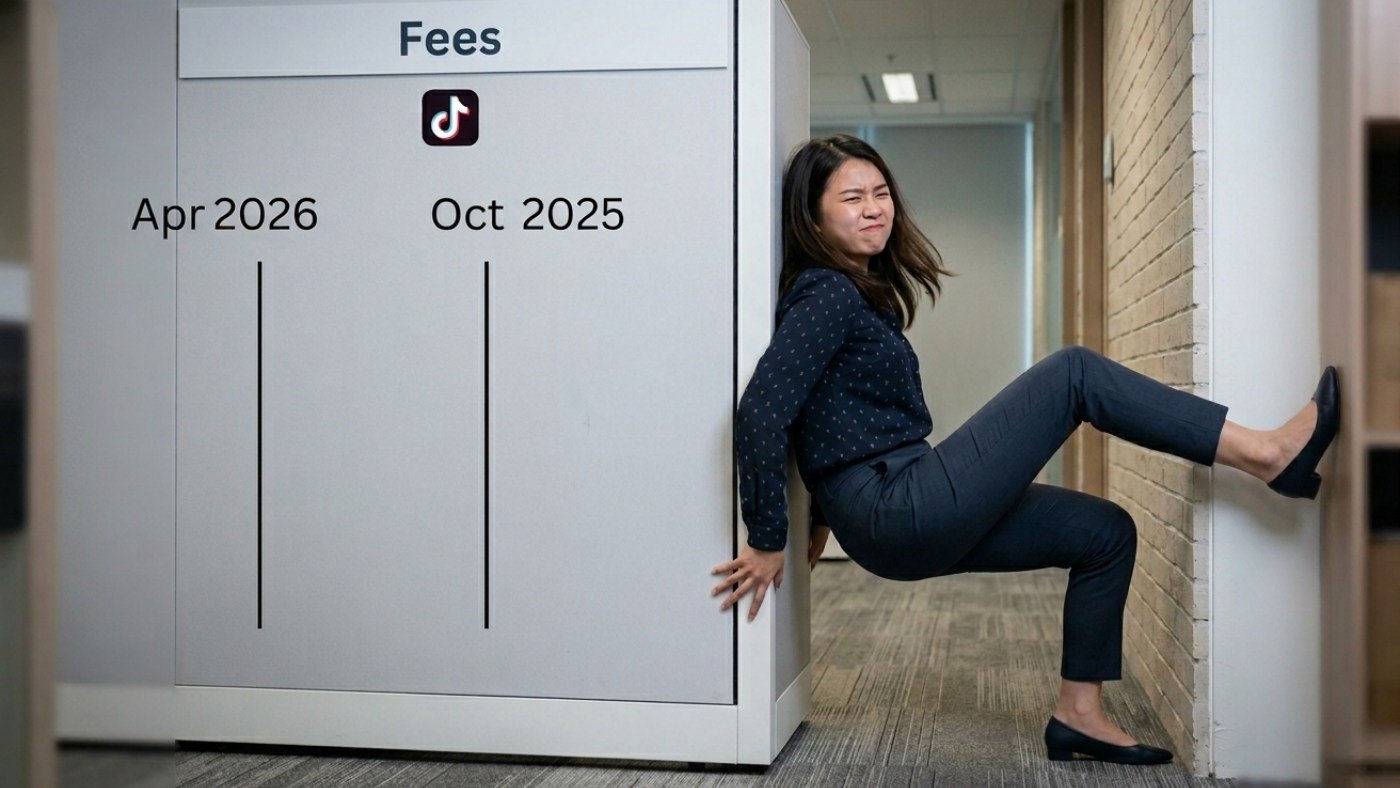
Do your TikTok Shop payouts feel smaller than they used to? You’re not imagining it. In the past nine months, TikTok Shop has pushed through different fee changes for Singapore sellers:
- 1 October 2025 — Transaction Fee jumped from 2.18% to 3.27%
- 22 December 2025 — A new (optional) 1.09% Pre-order Service Fee was introduced for sellers who want to offer items for pre-order
- 1 April 2026 — Platform Commission rates rose across every product cluster, and the Transaction Fee calculation base was expanded to include platform discounts
Each change on its own looks small. Stacked together, the baseline cost of selling on TikTok Shop in Singapore is now noticeably higher than it was a year ago.
Here’s what TikTok Shop actually charges you in 2026, all taken directly from TikTok’s official Seller University fee pages.
The Two Core Fees You’ll Always Pay
Every successfully delivered order on TikTok Shop Singapore is charged two mandatory fees, both automatically deducted from your payout:
- Platform Commission Fee — between 5.45% – 7.085%
- Transaction Fee — 3.27% flat across all categories (GST inclusive)
Cancelled, returned, or fully refunded orders do not get charged. Partially refunded orders get a proportional fee refund.
Platform Commission Fee (From 1 April 2026)
The Platform Commission Fee is what TikTok Shop takes for being a marketplace that sends customers to your store. It’s calculated on the item price after any Seller Discount, but before TikTok’s own platform vouchers and before shipping.
All rates below are GST-inclusive and taken directly from TikTok’s official Platform Commission Fee page.
| Cluster | Commission for BXP sellers | Commission for other sellers |
|---|---|---|
| Electronics | 5.450% – 7.085% | 6.540% – 8.175% |
| FMCG | 7.085% | 8.175% |
| Fashion | 7.085% | 8.175% |
| Lifestyle | 5.450% – 7.085% | 6.540% – 8.175% |
Any product category that isn’t in this table gets a default rate of 8.175% for standard sellers and 7.085% for BXP sellers. So there’s no escape route for sellers in unusual categories.
The formula is straightforward:
Platform Commission Fee = (Item Price − Seller Discount) × Fee Rate
Shipping fees and TikTok-funded platform discounts do not reduce the commission base. Only your own Seller Discount does.
What is BXP, and Is It Worth Joining?
BXP stands for Bonus Extra Programme. It’s TikTok Shop’s promotional programme where sellers offer customers Bonus Cashback vouchers and Voucher Xtra discounts in exchange for lower Platform Commission rates and more product visibility.
Joining BXP drops your commission rate by roughly 1.09 percentage points. On a $1,000 FMCG order, that’s about $10.90 in savings.
But there are a few things to weigh:
- BXP-restricted products (virtual products, infant formula, gold decorations, semi-finished gold) do not qualify for the lower rate. They get charged the standard rate of 7.085% even for BXP sellers.
- Mixed orders (some BXP-restricted, some not) get the discounted rate, but the non-restricted items in that order get hit with an additional 3.27% BXP service fee.
- Suspended BXP sellers (those who fail to meet programme criteria) revert to the standard commission rate until their status is restored.
- The customer-facing vouchers you offer through BXP come out of your own pocket. The commission saving only works out in your favour if the incremental sales volume from the programme exceeds what you give up in discounts.
For sellers with thin margins, BXP can end up costing more than it saves. It’s worth modelling your specific product mix before enrolling.
Transaction Fee: 3.27% (And a Sneaky Change)
On top of the commission, TikTok Shop charges a flat 3.27% Transaction Fee on every delivered order.
This fee was 2.18% before 1 October 2025. On that date, it jumped to 3.27% — essentially going from 2.0% + 9% GST to 3.0% + 9% GST. That’s a 50% relative increase on a per-dollar basis.
But there’s a second, quieter change that took effect on 1 April 2026 and matters just as much.
Before 1 April 2026, the formula was:
Transaction Fee = (Customer Payment − Customer Order Refund) × 3.27%
From 1 April 2026, per TikTok’s official Transaction Fee page, the formula became:
Transaction Fee = ((Customer Payment − Customer Order Refund) + (Platform Discount − Platform Discount Refund)) × 3.27%
In plain English: sellers now pay the 3.27% Transaction Fee on amounts that TikTok itself subsidised through its own platform vouchers and discounts. You’re paying a transaction fee on money that never passed through your bank account.
Here’s an illustrative example. Say a customer buys a $100 item from your TikTok shop, and TikTok applies a $20 platform voucher funded entirely by them. So the customer pays $80.
But your Transaction Fee is now calculated on the full $100, not the $80 the customer actually paid. That’s $3.27 instead of $2.62. Your transaction fee has gone up by an extra $0.65 per order, due to a discount that you didn’t fund.
This change mirrors what TikTok Shop did in Thailand around the same time — Thailand’s transaction fee calculation base also expanded to include platform subsidies in March 2026.
Also worth noting: the Transaction Fee is calculated on Customer Payment, which includes customer-paid shipping fees. The Platform Commission Fee does not. So if a customer pays $50 for an item plus $5 for shipping, the Transaction Fee base is $55, not $50.
Pre-order Service Fee: The New One
Since 22 December 2025, sellers who list pre-order products get charged an additional 1.09% (GST inclusive) on top of the Platform Commission Fee.
Pre-order Service Fee = (Item Price − Seller Discount) × 1.09%
If you don’t sell pre-order items, you can skip this. But if your business model depends on pre-orders (this is common for specialty fashion, limited-edition items, or imported goods), this is a fee you didn’t have to pay a year ago.
How the Fees Have Moved in 9 Months
Here’s the trajectory for a non-BXP Fashion seller:
| Date | Commission (non-BXP) | Transaction Fee | Pre-order Fee | Total Mandatory (non-preorder) |
|---|---|---|---|---|
| 15 Jul 2025 | 7.085% | 2.18% | — | 9.265% |
| 1 Oct 2025 | 7.085% | 3.27% | — | 10.355% |
| 22 Dec 2025 | 7.085% | 3.27% | +1.09% on pre-orders | 10.355% (non-preorder) |
| 1 Apr 2026 | 8.175% | 3.27% (expanded base) | +1.09% on pre-orders | 11.445% (non-preorder) |
A non-BXP Fashion seller’s baseline cost rose from 9.265% to 11.445% in just nine months, which is a 2.18 percentage point increase. That’s roughly $22 more in fees for every $1,000 in sales compared to July 2025, before even accounting for the Transaction Fee base expansion.
Worked Example: A $50 Fashion Order
Using TikTok’s official calculation method, here’s what a non-BXP Fashion seller actually takes home on a $50 item (no seller discount, no shipping, no platform voucher).
| Line Item | Amount |
|---|---|
| Item price | $50.00 |
| Seller discount | $0.00 |
| Commission base | $50.00 |
| Platform Commission (8.175%) | −$4.09 |
| Transaction Fee base (Customer Payment) | $50.00 |
| Transaction Fee (3.27%) | −$1.64 |
| Net payout (before cost of goods) | $44.27 |
| Effective take rate | 11.46% |
Now let’s model the same order with a $10 TikTok-funded platform voucher (customer pays $40, but TikTok funds $10 of that).
| Line Item | Amount |
|---|---|
| Item price | $50.00 |
| Commission base (Item − Seller Discount) | $50.00 |
| Platform Commission (8.175%) | −$4.09 |
| Customer payment (after TikTok’s $10 voucher) | $40.00 |
| Transaction Fee base (Customer Payment + Platform Discount, from 1 April 2026) | $50.00 |
| Transaction Fee (3.27%) | −$1.64 |
| Net payout | $34.27 |
| Effective take rate on what the customer paid | 14.33% |
Under the old rules (before 1 April 2026), the Transaction Fee would have been calculated on the $40 customer payment, or about $1.31. Under the new rules, it’s $1.64. That $0.33 difference doesn’t sound like much, but scaled across a few thousand orders a month with TikTok-funded promotions, it adds up.
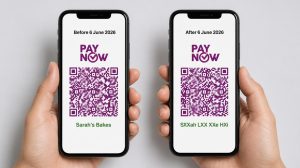
DID YOU KNOW? If you sold the same $50 item on your own WooCommerce store and collected PayNow using SGPayNowQR plugin, you’d receive the full $50. No commission, no transaction fee, no platform surcharge.
Other Costs That Can Stack on Top
The 11.4% baseline is before any optional (or sometimes not-so-optional) programmes:
Affiliate Programme. If you enable TikTok creators to promote your products, you set the commission rate. It’s a cost you pay creators, not TikTok, but it comes straight out of your margin on affiliate-driven sales.
Fulfilled by TikTok (FBT). TikTok’s warehousing and fulfilment service has its own pick, pack, and storage fees separate from platform fees.
BXP customer vouchers. If you’re enrolled in BXP, the cashback and vouchers offered to customers are funded by you.
Ads (GMV Max, Video Shopping Ads, LIVE Ads). Separate from everything above. Budget is entirely at your discretion, but TikTok’s algorithm increasingly rewards stores that pay to play.
How TikTok Shop Now Compares With Shopee and Lazada
For a $50 item with no optional programmes, here’s a quick side-by-side of the mandatory fees:
Updated 14 September 2026: the Shopee row now uses Shopee’s rates from 28 August 2026.
| Platform | Commission | Txn Fee | Total Mandatory | Fees on $50 |
|---|---|---|---|---|
| TikTok Shop (Fashion, non-BXP) | 8.175% | 3.27% | 11.445% | ~$5.73 |
| Shopee (typical Fashion, non-Mall, not on Promo Xtra) | 14.17% | 3.27% | 17.44% | ~$8.73 |
| Lazada (typical Fashion, non-LazMall) | up to 10.90% | 3.27% | 14.17% | ~$7.09 |
| Your own WooCommerce store + SGPayNowQR | 0% | 0% | 0% | $0.00 |
A few observations worth flagging:
- TikTok Shop’s non-BXP commission (8.175% in Fashion) is now well below Shopee’s 14.17% for a comparable non-Mall seller.
- TikTok Shop and Lazada now share the same 3.27% transaction fee, suggesting the big marketplaces are converging on similar payment processing fee structures.
- Since Shopee’s 28 August 2026 rate change, TikTok Shop’s mandatory fees are the lowest of the three and Shopee’s are the highest. Shopee’s optional Promo Xtra Programme (formerly Coins Cashback) lowers commission to 10.90% but adds a 5.45% service fee, which takes a general-category seller to 19.62%. For the full breakdown on Shopee, see our Shopee fees calculator post and for Lazada, the Lazada seller fees guide.
Why TikTok Shop Fees Keep Rising
When TikTok Shop launched in Singapore in 2023, it undercut competitors with aggressive commission rates to pull sellers onto the platform. Low commissions, low transaction fees, lots of free promotional campaigns.
That honeymoon is over. Industry analysts have flagged that TikTok Shop is now in monetisation mode across Southeast Asia, with Vietnam seeing standard marketplace commissions rise from 2%-3% to 12.5% in under two years. Singapore’s fee increases are milder, but the trajectory is unmistakable.
It mirrors what Shopee has been doing: compete on low fees to acquire sellers, then gradually dial up the costs once sellers are embedded and dependent on the traffic.
What Singapore Sellers Are Doing About It
Small sellers can’t really negotiate TikTok Shop fees. So the practical moves are:
1. Reprice to absorb the fee increase. If you’re selling on TikTok Shop and on other channels, the 11.4% baseline (plus any BXP voucher costs, plus any affiliate or ad spend) needs to be built into your TikTok Shop pricing. Many sellers maintain different prices across channels to protect margin.
2. Shift your energy towards repeat buyers. First-time discovery orders are where TikTok Shop fees hurt most. Once a customer trusts you, bringing them back through your own channels (WhatsApp, email, a direct store link) protects more of your margin.
3. Build your own checkout for repeat and high-value orders. For regular customers and larger orders where the fee hit is most painful, many Singapore sellers direct buyers to their own website or send a WhatsApp PayNow payment link. PayNow settles instantly from the customer’s bank to yours — no commission, no transaction fee, no expanded calculation base.
Setting this up on WooCommerce is more work than just listing on a marketplace. But for sellers who’ve built a real customer base, the ongoing savings can easily justify the initial effort. Our guide on accepting PayNow on WooCommerce walks through the setup.
What we think
TikTok Shop is still a strong discovery channel. For many Singapore sellers, it makes sense as part of the mix. But the economics of selling on it in April 2026 are very different from April 2024.
A non-BXP Fashion seller now hands over 11.4% of every order in mandatory fees before ads, affiliates, or pre-order surcharges. That’s a meaningful chunk of margin, and the direction is still upward.
The question worth asking is how much of your business you want sitting entirely on a platform where fees are still climbing. If you’re weighing your options, our guides on running your own store with zero payment fees and whether you still need your own website when you’re already on marketplaces are good places to start.